

A General Strategy to Improve the Safety and Efficacy of GPCR-Targeted Drugs

A General Strategy to Improve the Safety and Efficacy of GPCR-Targeted Drugs

Files

Description

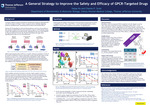
Purpose: G protein-coupled receptors (GPCRs) are integral membrane proteins that constitute the largest family of drug targets. They respond to hormones or drugs and activate downstream signaling pathways via G proteins and β-arrestins, eliciting therapeutic benefits and side effects. For example, β2-adrenergic receptor (β2AR) agonists relax airways in asthma through G protein activation, but cause tolerance, tachyphylaxis, reduced duration of action, and inflammation through activation of β-arrestin signaling. Developing general strategies to bias signaling toward therapeutically relevant pathways could make GPCR-targeted drugs safer and more effective. This project investigates the generality of signaling bias by introducing mutations into the β1-adrenergic receptor (β1AR) that confer sensitivity to the β2AR-selective 'molecular glue' difluorophenylquinazoline (DFPQ), which inhibits harmful β-arrestin signaling without affecting beneficial G protein activation.

Methods: Chimeric β1AR variants were created with a β2AR-derived mutation (L154V) in transmembrane helix 3 (TM3), a TM4 segment from β2AR, or both, and expressed in HEK293 cells. DFPQ inhibition of isoproterenol-induced β-arrestin-2 recruitment was measured using bioluminescence resonance energy transfer (BRET).

Results: Wild-type β1AR exhibited minimal response to DFPQ. The L154V mutant and TM4 chimera each conferred moderate DFPQ sensitivity, partially inhibiting β-arrestin recruitment. The combination variant greatly enhanced this effect, revealing additive contributions of TM3 and TM4 residues in forming the drug-binding site.

Conclusions: These results demonstrate that TM3/TM4 residues create a transferable allosteric pocket, enabling engineered bias toward G protein signaling in β1AR. Future efforts will assess additional TM3/TM4 variants and design β1AR-selective allosteric drugs that achieve improved cardiovascular outcomes through GPCR signaling bias.

Publication Date

1-2-2026

Keywords

GPCR-targeted drugs

Disciplines

Medical Biochemistry | Medicine and Health Sciences

Comments

Presented at the 2026 AOA Research Symposium.

A General Strategy to Improve the Safety and Efficacy of GPCR-Targeted Drugs

Share

COinS
