


Files
Download Full Text (713 KB)
Description
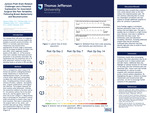
Background: The Jackson-Pratt (JP) drain is a closed suction drain used in surgeries throughout the body. This prevents seroma formation through continual negative pressure drainage while resisting collapse and obstruction. JP drains are mainstays in breast reconstruction and mastectomy.
Methods: Through a literature review using keywords such as “Surgical Site Infection” (SSI), “Quality of Life” (QOL), and “Surgical Site Pain” (SSP), we summarized JP drain-related complications in breast reconstruction and mastectomy. Although the drain effectively reduces seroma formation, there has been a lack of innovation in addressing these issues. There is no standardized approach to JP drain post-operative care or pain minimization addressing the variables contributing to pain, such as nerve structures, to inform placement.
Results: In a cross-sectional survey, patients reported increased pain at the body wall, incision site, and drain entry site, all significantly associated with drain durations of over 2 weeks. 84.7% of patients reported JP drains increased difficulty completing daily tasks, and 66% reported a negative impact on mood.
Conclusion: A standard practice to address these issues does not exist. There is a need for innovation within the JP drain space to improve QOL, reduce SSI rates, and reduce SSP. Chronic pain following mastectomy is a well-described phenomenon, likely from proximity to many peripheral nerves travelling along the anterior and lateral chest wall. Among the cutaneous distributions of these nerves, there may be certain locations where exit sites are particularly painful, a possible pain modifier that can be explored in future studies to decrease SSP.
Publication Date
2-2-2026
Keywords
Jackson-Pratt drain, mastectomy, breast reconstruction, quality of life, surgical site pain, surgical site infection
Disciplines
Medicine and Health Sciences | Plastic Surgery
Recommended Citation
Haber, BS, Spencer; Koka, BS, Krishna; Simon, BS, Elizabeth; Williams, BS, Devin; and Newman, MD, Andrew, "Jackson-Pratt Drain-Related Challenges and a Potential Explanation for Associated Surgical Site Pain Variability Following Breast Mastectomy and Reconstruction" (2026). Alpha Omega Alpha Research Symposium Posters. 21.
https://jdc.jefferson.edu/aoa_research_symposium_posters/21



Comments
Presented at the 2026 AOA Research Symposium.