


-
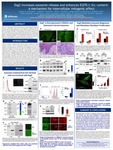
Dsg2 increases exosome release and enhances EGFR/c-Src content: A mechanism for intercellular mitogenic effect
Andrew M. Overmiller; Jennifer A. Pierluissi; Peter J Wermuth; Ubaldo E. Martinez-Outshoorn, MD; Madalina Tuluc; Adam J. Luginbuhl; Joseph Curry; Larry A. Harshyne; James K. Wahl, III; Andrew P. South; and M G Mahoney
Abstract:
Exosomes are nanoscale membrane-derived vesicles that are secreted by cancer cells and play a critical role in modulating the tumor microenvironment and disease pathogenesis. Dsg2, a desmosomal cadherin often overexpressed in skin malignancies including squamous cell carcinoma (SCC), can activate EGFR/c-Src signaling and promote oncogenesis. We sought to address the potential role of Dsg2 in exosome biogenesis and intercellular signaling in SCC. Here, purified exosomes from SCC cells and head/neck SCC patient sera were enriched with a processed 65 kDa membrane-associated C-terminal fragment of Dsg2. Cells overexpressing Dsg2 had increased exosome release and protein content and produced particles enriched with EGFR/c-Src, enhancing proliferation in recipient fibroblasts, compared to parental cell exosomes. This study suggests a mechanism by which SCC cells can promote intercellular signaling and modulate the tumor microenvironment through enhanced Dsg2 levels.
Printing is not supported at the primary Gallery Thumbnail page. Please first navigate to a specific Image before printing.



