


Files
Download Full Text (458 KB)
Description
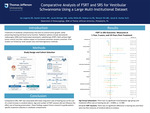
Purpose: Stereotactic radiosurgery (SRS) and fractionated stereotactic radiotherapy (FSRT) both achieve high control rates of vestibular schwannomas (VS), but their comparative effects on functional outcomes remain uncertain. Prior studies are limited by small sample sizes and heterogeneous methods.
Methods: Deidentified data were analyzed from 100 healthcare organizations through TriNetX. Adults with VS (ICD-10: D33.3) and sensorineural hearing loss (H90.A/H90.1–H90.8) were included. Patients with neurofibromatosis or prior surgical resection were excluded. Treatment cohorts consisted of single-session SRS or ≥2-sessions of FSRT. Propensity score matching (1:1) yielded 909 patients per cohort. Outcomes—including hearing loss, cerebral edema, hydrocephalus, and cranial nerve dysfunction—were assessed at 1-, 5-, 10-, and 15-years post- treatment, excluding patients with pre-treatment outcomes. Age-stratified analyses and meta- regression evaluated the impact of age on hearing outcomes. Subgroup analyses compared 2–5 vs ≥5 FSRT sessions.
Results: At 15 years, FSRT was associated with a lower risk of hearing loss compared to SRS (risk difference −9.4%; p< 0.001) but a higher risk of cerebral edema (+2.6%; p=0.003). Hearing loss events clustered within the first year, while cerebral edema primarily occurred within five years. No differences were observed in other neurologic or vestibular outcomes. Hearing preservation was similar across FSRT fractionation schemes, and age did not modify treatment effect (β = −0.0095, p=0.789).
Conclusions: FSRT offers improved long-term hearing preservation compared to SRS with a small increase in cerebral edema risk. These findings support individualized radiation selection in VS management.
Publication Date
2-2-2026
Keywords
vestibular schwannoma
Disciplines
Medicine and Health Sciences | Otolaryngology
Recommended Citation
Argento, BS, Ian; Uralov, MD, Daniel; Beiriger, MD, Jacob; Walia, BS, Anika; Liu, BS, Kalena; Shi, MD, Wenyin; and Hunter, MD, Jacob B., "Comparative Analysis of FSRT and SRS for Vestibular Schwannoma Using a Large Multi-Institutional Dataset" (2026). Alpha Omega Alpha Research Symposium Posters. 32.
https://jdc.jefferson.edu/aoa_research_symposium_posters/32



Comments
Presented at the 2026 AOA Research Symposium.