


Files
Download Full Text (725 KB)
Description
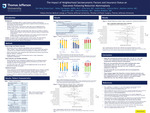
Purpose: The impact of socioeconomic status (SES) and neighborhood-level deprivation on surgical outcomes in breast reduction remains unclear. This study evaluated the effect of area deprivation index (ADI) and insurance status on postoperative outcomes following reduction mammoplasty.
Methods: A retrospective review of reduction mammoplasty cases was conducted at a single institution over a 7-year period. Patients ≥18 years old who underwent reduction mammoplasty for benign macromastia were included. Zip-code linked ADI, insurance type, and postoperative complication rate were assessed.
Results: A total of 594 patients were analyzed. Mean age was 36.2 ± 13.1 years and mean body mass index (BMI) was 32.6 ± 5.2 kg/m². Most patients identified as Black race (386 [65%]), while 196 (33%) used Medicaid insurance. Patients living in more deprived neighborhoods (higher ADI quartiles) were more likely to identify as Black, have higher BMI, and use Medicaid compared to lower ADI quartiles. Following surgery, 213 (35.9%) patients developed minor complications. Wound healing complications (N=139, 23.4%) were the most common. In an adjusted multivariable analysis, only higher BMI and Medicaid status (OR: 2.39, CI: 1.56-3.68, p< 0.001) were significantly associated with increased odds of developing a minor complication. Compared to normal BMI, overweight (OR: 2.51, 95% CI: 1.07–6.44, p = 0.042), obese (OR: 3.32, CI: 1.42–8.53, p = 0.008), and severely obese (OR: 3.96, CI: 1.64–10.5, p = 0.003) patients had higher odds of having a minor complication. Black race was associated with decreased odds of minor complications (OR: 0.42, CI: 0.24-0.71, p=0.002). ADI quartile was not significantly associated with complication rate.
Conclusions: Higher BMI and Medicaid status were independently associated with increased risk of minor complications following reduction mammoplasty, while Black race was associated with lower odds. ADI was not associated with risk of postoperative complications, suggesting that disparities in reduction mammoplasty outcomes may reflect insurance status differences rather than neighborhood factors.
Publication Date
2-2-2026
Keywords
reduction mammoplasty, neighborhood socioeconomic status, area deprivation index, postoperative complications
Disciplines
Medicine and Health Sciences
Recommended Citation
Chan, Teresa; Van Housen, MSPAS, Kelsey; Isch, MD, Emily; Monzy, Judith; Bartz, Julianne; Jekins, MD, Matthew; Kim, MD, David; Newsman, MD, Andrew; and McMahon, MD, Heather, "The Impact of Neighborhood Socioeconomic Factors and Insurance Status on Outcomes Following Reduction Mammoplasty" (2026). Alpha Omega Alpha Research Symposium Posters. 14.
https://jdc.jefferson.edu/aoa_research_symposium_posters/14



Comments
Presented at the 2026 AOA Research Symposium.