


Files
Download
Download Full Text (932 KB)
Description
Background
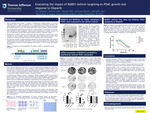
- BRCA-Associated Ring Domain 1 (BARD1), a heterodimeric binding partner of the tumor suppressor BRCA1, plays an essential role in homologous recombination-mediated DNA repair. Mutations in BARD1 increase cancer susceptibility and result in a molecular phenotype that predicts sensitivity to poly (ADP-ribose) polymerase inhibition (PARPi), including Olaparib.
- Several alternatively spliced isoforms of BARD1, including BARD1δ and BARD1φ, have also been implicated in tumor progression. These isoforms, characterized by deletion of exons 2-6 and 3-6, respectively, lack the RING domain required for BRCA1 interaction (Figure 1).
- Upregulation of BARD1 isoforms is associated with poor prognosis in several tumor types. However, the role of BARD1 isoforms in pancreatic ductal adenocarcinoma (PDAC) tumor progression, as well as potential mechanisms of oncogenicity, have yet to be defined.
- We previously reported increased interaction between the RNA binding protein, HuR, a known stabilizer of pro-survival mRNAs, and BARD1 δ and φfollowing treatment with Olaparib. Here, we investigate the impact of directly targeting these isoforms on PDAC growth and Olaparib response.
Publication Date
2-2-2026
Keywords
PDAC, DNA repair, PARP1 inhibition
Disciplines
Medicine and Health Sciences | Surgery
Recommended Citation
Zekavat, Lily; Zion, Samuel; Wei, Boxuan; Nevler, Avinoam; and Jain, Aditi, "Evaluating the Impact of BARD1 Isoform Targeting on PDAC Growth and Response to Olaparib" (2026). Alpha Omega Alpha Research Symposium Posters. 31.
https://jdc.jefferson.edu/aoa_research_symposium_posters/31



Comments
Presented at the 2026 AOA Research Symposium.