


Files
Download Full Text (756 KB)
Description
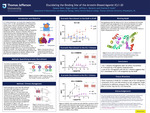
Background and Purpose: 6.7 million Americans live with congestive heart failure (CHF). In CHF, catecholamines are released into cardiac tissue, bind β-adrenergic receptors (βARs), and activate G-protein signaling cascades, causing ischemia and apoptosis. Accordingly, β-blockers are used to antagonize catecholamine binding to βARs and suppress apoptotic downstream effects. However, β-blockers have dose-limiting hypotension, bradycardia and fail to stimulate the cardioprotective β-arrestin signaling pathway. These limits create opportunities for the development of drugs that selectively stimulate β-arrestin signaling while suppressing cardiotoxic G protein signaling. We have previously reported a biased agonist of the β-arrestin pathway (ICL1-20) that selectively stimulates β-arrestin recruitment to the β2AR, but not the β1AR. The mechanism through which ICL1-20 recruits β-arrestin to the β2AR is unclear.
Methods: This project aims to identify residues on the β2AR critical for ICL1-20 function through chimera mutagenesis. For this method, a series of chimeric receptors were created in which secondary structural elements from β2AR were replaced with corresponding ones from β1AR (e.g., intracellular loop 1 (ICL1), extracellular loop 1 (ECL1), etc). Chimeric receptors were tested for sensitivity to ICL1-20. Loss of ICL1-20 agonism of β-arrestin recruitment to chimeric receptors indicates loss of β2AR sequence important for ICL1-20 recognition or function.
Results: Preliminary mutagenesis results suggest that intracellular loop 1 (ICL1) of the β2AR contributes to ICL1-20 recognition by the β2AR and subsequent β-arrestin recruitment.
Conclusion: Results from comprehensive chimera mutagenesis studies should define structural determinants of ICL1-20 function and inform the development of drug-like molecules that can promote arrestin-biased agonism of the β2AR.
Publication Date
2-2-2026
Keywords
arrestin-biased agonism
Disciplines
Cardiology | Medicine and Health Sciences
Recommended Citation
Wein, Kesara; Armen, Roger; Benovic, Jeffrey L.; and Scott, Charles P., "Elucidating the Binding Site of the Arrestin-Biased Agonist ICL1-20" (2026). Alpha Omega Alpha Research Symposium Posters. 29.
https://jdc.jefferson.edu/aoa_research_symposium_posters/29



Comments
Presented at the 2026 AOA Research Symposium.