


Files
Download Full Text (1.3 MB)
Description
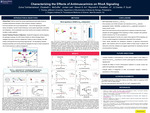
Purpose: Airway hyperresponsiveness in asthma is driven by acetylcholine-mediated activation of the muscarinic acetylcholine 3 receptor (M3R), promoting bronchoconstriction, mucus hypersecretion, and airway remodeling. Despite directly targeting this pathway, antimuscarinics remain adjunctive rather than first-line therapy, suggesting a disconnect between biological rationale and clinical efficacy. Recent work from the Scott Lab at Thomas Jefferson University demonstrates that M3R in human airway smooth muscle (HASM) cells drives muscle shortening through G12/13–driven RhoA signaling rather than through Gq/11-dependent calcium flux. We therefore investigated whether clinically prescribed antimuscarinics effectively inhibit G12/13-dependent RhoA signaling in HASM cells.
Methods: Human telomerase reverse transcriptase immortalized HASM cells with Renilla luciferase under the control of a serum response element (hTERT-SRE) were used to evaluate ligand-dependent RhoA activation. Cells were stimulated for 5 hours with drug, either alone or combined with 100 µM acetylcholine. Luciferase activity was measured and normalized to the maximal acetylcholine response, using 3-parameter nonlinear regression to determine residual RhoA activation.
Results: Ipratropium bromide, revefenacin, tiotropium bromide and umeclidinium bromide exhibited partial agonism of the M3R-dependent RhoA signaling pathway that governs HASM contraction. In preliminary studies, glycopyrrolate appears to behave as a neutral antagonist of M3R signaling. Partial agonism by erstwhile muscarinic antagonists may sustain pro-contractile signaling despite receptor blockade.
Conclusions: These findings suggest that many anticholinergics inadvertently preserve G12/13–RhoA signaling, limiting their bronchoprotective efficacy. Defining this signaling bias across antimuscarinic agents provides a framework for developing next-generation therapies that more effectively suppress the G12/13–RhoA axis to control airway hyperresponsiveness and hypertrophy.
Publication Date
2-2-2026
Keywords
RhoA signaling, lung function, morbidity, older adults
Disciplines
Medical Biochemistry | Medicine and Health Sciences | Pulmonology
Recommended Citation
Tukhtamisheva, Zuhra; McDuffie, Elizabeth L.; Lee, Jordan; An, Steven S.; Panettieri, Reynold A. Jr.; and Scott, Charles, "Characterizing the Effects of Antimuscarinics on RhoA Signaling" (2026). Alpha Omega Alpha Research Symposium Posters. 27.
https://jdc.jefferson.edu/aoa_research_symposium_posters/27



Comments
Presented at the 2026 AOA Research Symposium.